
What Size Gutters Does Your Home Need? A Guide for Rockford, IL Homeowners
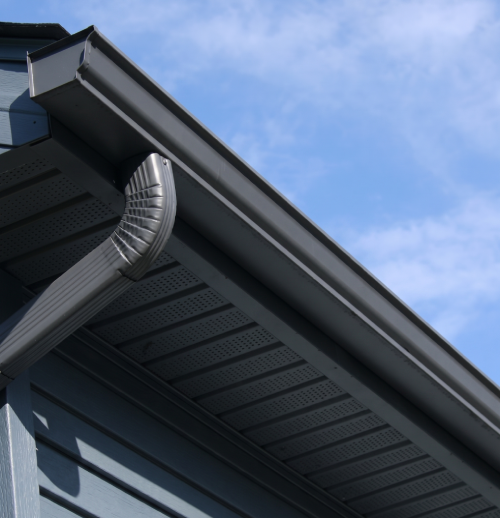
The Right Sized Gutters
Properly sized gutters help move rainwater away from your roof, siding, and foundation. The right gutter size and downspout setup can help prevent overflow during heavy Rockford storms.
Summary
Most homes use 5-inch or 6-inch gutters, but the right size depends on your roof area, roof pitch, local rainfall, and how much water needs to move through the gutter system.
For Rockford homeowners, gutters that are too small can overflow during heavy rain and send water toward your siding, fascia, landscaping, or foundation. In some cases, moving from 5-inch to 6-inch gutters or changing the number and placement of downspouts can improve drainage.
Not sure what size gutters are right for your home?
Contact Baney Construction & Restoration, Inc. for professional gutter installation and replacement in Rockford, IL.
What Are the Standard Gutter Sizes for Homes?
Residential gutters are commonly available in 5-inch and 6-inch sizes. The measurement refers to the width across the top of the gutter.
Five-inch gutters are common on many residential properties and may provide enough capacity for smaller or moderately sized roofs. Six-inch gutters can carry more rainwater and may be better suited for homes with larger or steeper roofs.
The right choice should be based on the amount of water coming off your roof rather than simply choosing the same size gutters that are already installed.
When Are 5-Inch Gutters Enough?
Five-inch gutters may work well when a home has a relatively simple roof design, adequate downspout placement, and a roof area that does not send too much water into one section of the gutter system.
They are commonly found on residential properties and can provide dependable drainage when properly installed and maintained.
When Should You Consider 6-Inch Gutters?
Six-inch gutters may be a better fit for homes that deal with larger amounts of roof runoff.
You may want to consider 6-inch gutters when your home has:
A large roof surface
Steep roof slopes
Long roof sections draining into one gutter
Areas where multiple roof sections meet
Recurring gutter overflow during storms
Drainage problems despite regular gutter cleaning
Larger gutters are not automatically better for every house. The entire drainage system needs to work together.
Why Gutter Size Matters in Rockford, IL
Rockford homes can experience heavy rain, thunderstorms, snow, ice, and changing weather throughout the year. Your gutter system needs to collect water from the roof and move it safely away from the house.
When gutters cannot handle the volume of water coming off the roof, they may overflow.
That water has to go somewhere.
Instead of flowing through the downspouts, it can spill over the sides of the gutters and collect around areas of your home that you want to keep dry.
What Can Happen When Gutters Are Too Small?
Undersized or poorly designed gutters can contribute to:
Water running over the gutter edge
Wet or damaged fascia and soffit
Water stains on siding
Soil erosion around the house
Water pooling near the foundation
Basement or crawlspace moisture
Landscaping damage
Premature wear around roof edges
Overflow does not always mean the gutters themselves are too small. Clogs, poor gutter pitch, damaged sections, or too few downspouts can cause similar problems.
That is why the full system should be checked before deciding that larger gutters are necessary.
How Does Your Roof Affect Gutter Size?
Your roof plays a major role in determining how much water reaches the gutters.
A small, simple roof and a large, steep roof can experience the same rainfall while sending very different amounts of water toward individual gutter sections.
Roof Size
The more roof surface you have, the more rainwater the gutter system needs to collect.
Large homes or homes with wide roof sections may require larger gutters or additional downspouts to keep water moving.
Roof Pitch
Roof pitch also matters.
Water can move quickly down a steep roof during heavy rainfall. Your gutters need enough capacity to catch that runoff without allowing water to shoot over the edge.
Roof Design
Complex rooflines can create drainage trouble even when the gutters appear large enough.
Valleys and intersecting roof sections can direct large amounts of water toward one concentrated area. That section of gutter may overflow while the rest of the system works normally.
In these situations, gutter size, downspout placement, and the overall design should all be considered.
Do Downspouts Matter as Much as Gutter Size?
Yes. Installing larger gutters will not solve every drainage problem if the downspouts cannot move water away quickly enough.
Downspouts provide the exit route for rainwater collected by your gutters.
A gutter system may need additional or larger downspouts when long sections of gutter are expected to carry large amounts of water. Their placement also matters because water should not have to travel an excessive distance before reaching a downspout.
The goal is to create a system where water enters the gutters, moves freely to the downspouts, and drains away from the home.
Are Seamless Gutters a Good Choice for Rockford Homes?
Seamless gutters are made in long sections that reduce the number of joints along the gutter run.
Fewer seams can mean fewer areas where leaks may develop over time. Seamless gutters can also be measured and formed to fit the dimensions of the home.
They still require proper sizing, pitch, fastening, and downspout placement. A seamless gutter that is incorrectly sized or installed can still overflow or drain poorly.
How Do You Know If Your Current Gutters Are Too Small?
You do not necessarily need to measure your gutters to spot a drainage problem.
Pay attention to how the system performs during heavy rain.
Possible warning signs include:
Water regularly spilling over the gutter edge
Large amounts of water concentrating in one area
Gutters that remain full during rainfall
Water running down the siding
Soil washing away beneath the roofline
Standing water near the foundation
Fascia or soffit deterioration
Gutters pulling away from the house
If the gutters are clean but still overflow during heavy rainfall, the size or design of the system may need to be checked.
Should You Replace Your Gutters or Add More Downspouts?
It depends on what is causing the drainage problem.
If the existing gutters are in good condition and have enough capacity, adding or repositioning downspouts may help water drain faster.
Replacement may make more sense when the gutters are damaged, sagging, leaking, pulling away from the fascia, improperly sized, or nearing the end of their usable life.
A gutter contractor can look at the roof and drainage system as a whole rather than treating overflow as an isolated problem.
Get the Right Gutters for Your Rockford Home
Choosing between 5-inch and 6-inch gutters should be based on your home, roof, and drainage needs. Roof size, pitch, runoff patterns, gutter condition, and downspout placement all play a part in how well the system handles heavy rainfall.
If your gutters regularly overflow or struggle to move water away from your home, simply cleaning them may not solve the problem.
Baney Construction & Restoration, Inc. provides gutter installation, gutter replacement, and exterior home services throughout Rockford, IL. Contact Baney today to have your current gutter system checked and discuss the right setup for your home.
Frequently Asked Questions
Are 5-inch or 6-inch gutters better?
Neither size is best for every home. Five-inch gutters may work well for many residential roofs, while 6-inch gutters provide additional capacity for larger, steeper, or more demanding roof designs.
Are 6-inch gutters worth it?
They can be when a roof produces more runoff than a smaller gutter system can handle. Homes with large roof areas, steep slopes, or recurring overflow may benefit from 6-inch gutters.
Why do my gutters overflow during heavy rain?
Overflow can be caused by clogged gutters, undersized gutters, poor gutter pitch, too few downspouts, blocked downspouts, or large amounts of water being directed into one section of the system.
Can I replace 5-inch gutters with 6-inch gutters?
Yes. A home with 5-inch gutters can generally be fitted with 6-inch gutters when the larger size is appropriate for the roof and drainage needs.
How do I know what size gutters my Rockford home needs?
The roof area, roof pitch, drainage patterns, rainfall, and downspout configuration should be considered. A professional gutter contractor can inspect the home and recommend a system based on how water moves off the roof.